Detail — silk floss on cotton
×9.0
The Nargis Nurulla Khoja Collection
Suzani
Silk embroidery from Samarkand, Bukhoro and the greater Sogdian region.
Scroll to pull back
Silk embroidery from Samarkand, Bukhoro and the greater Sogdian region.
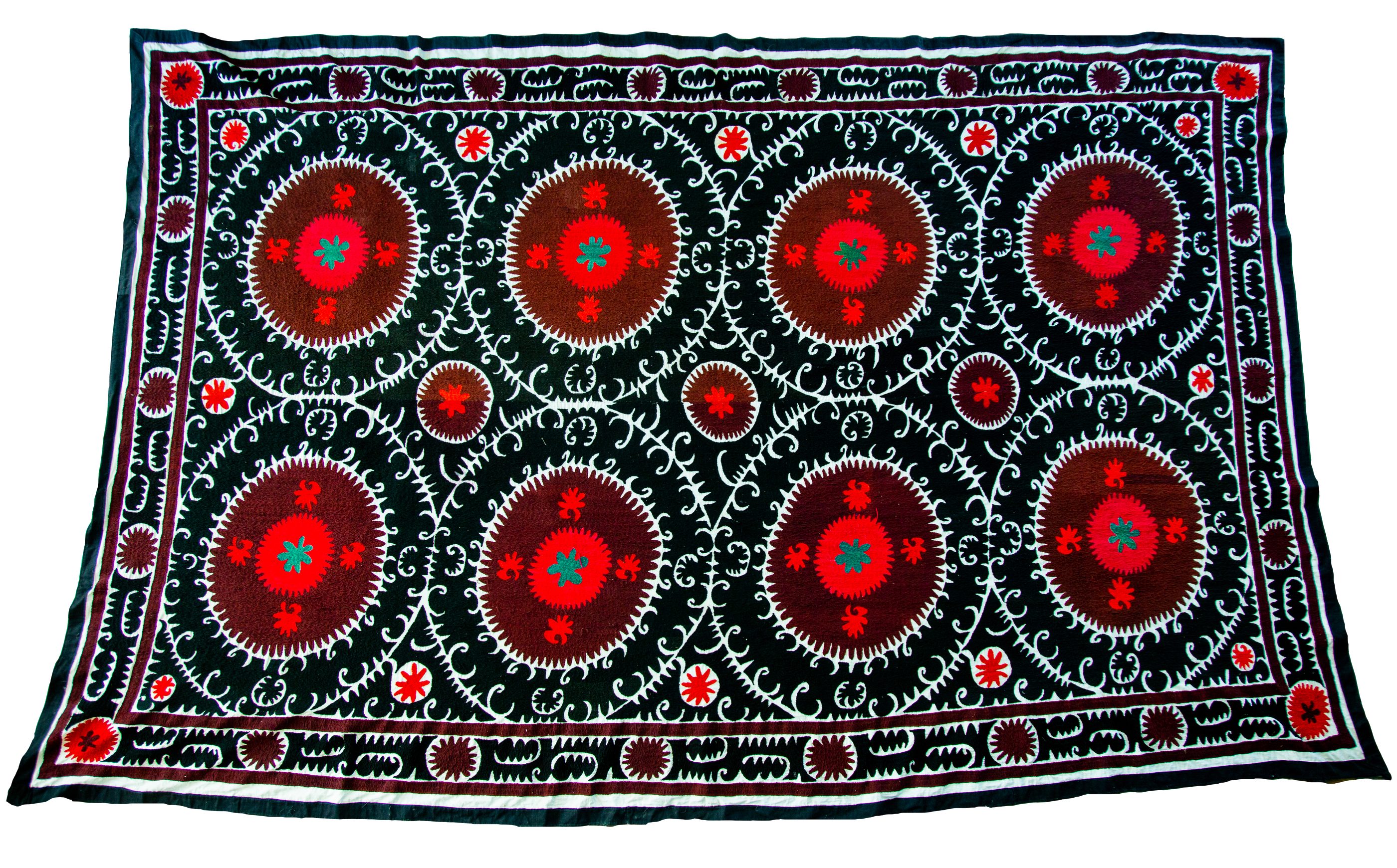
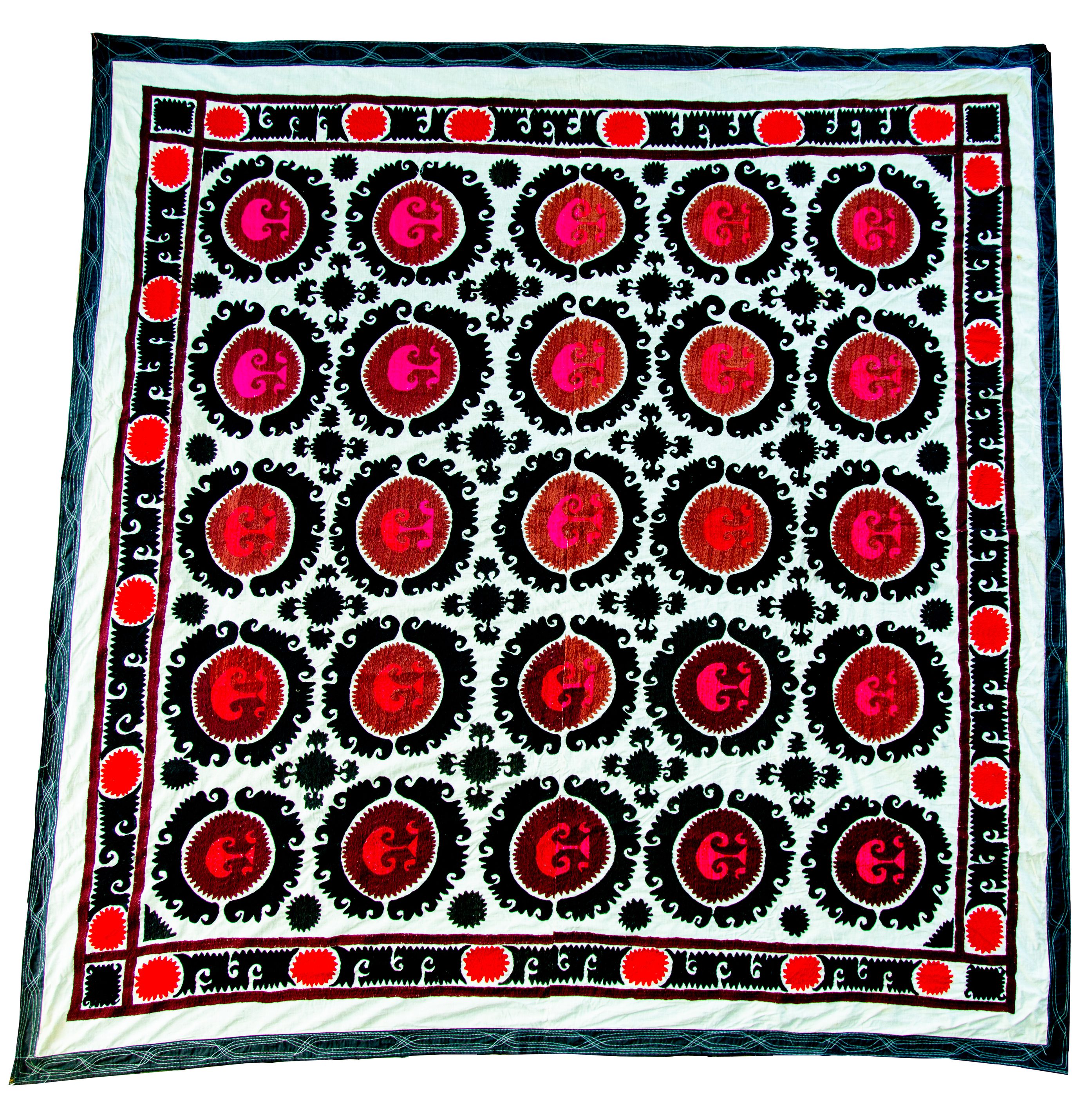
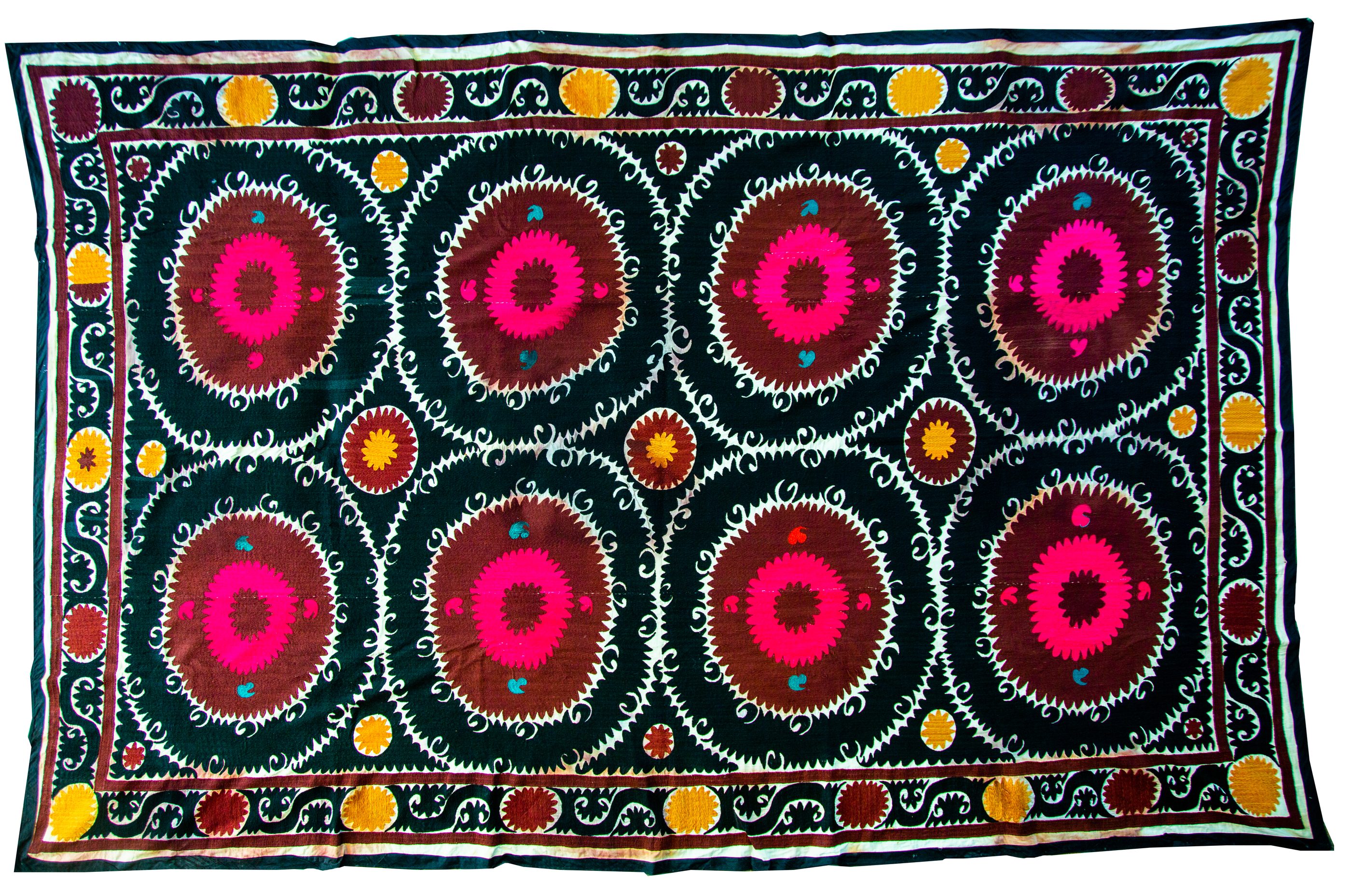
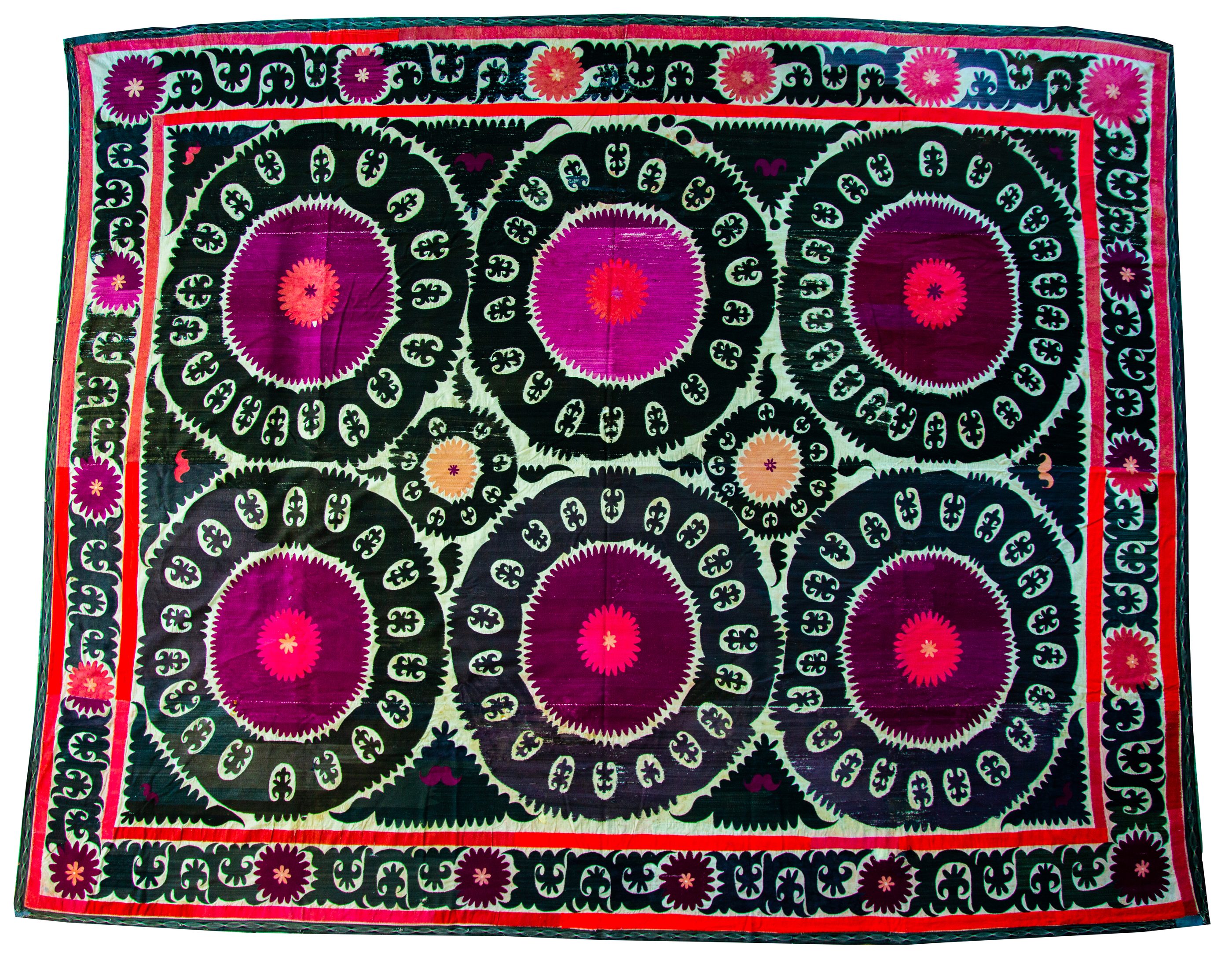
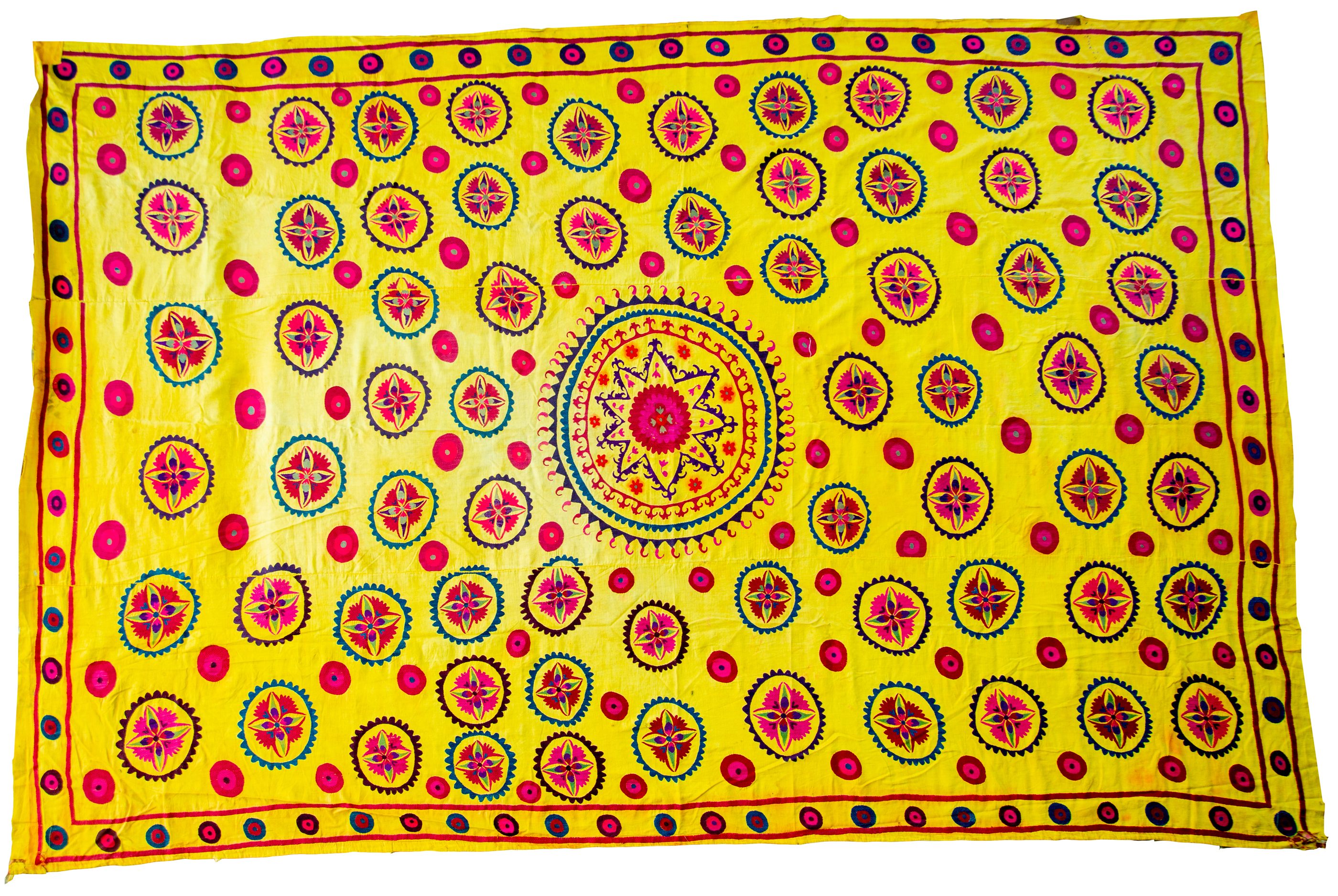
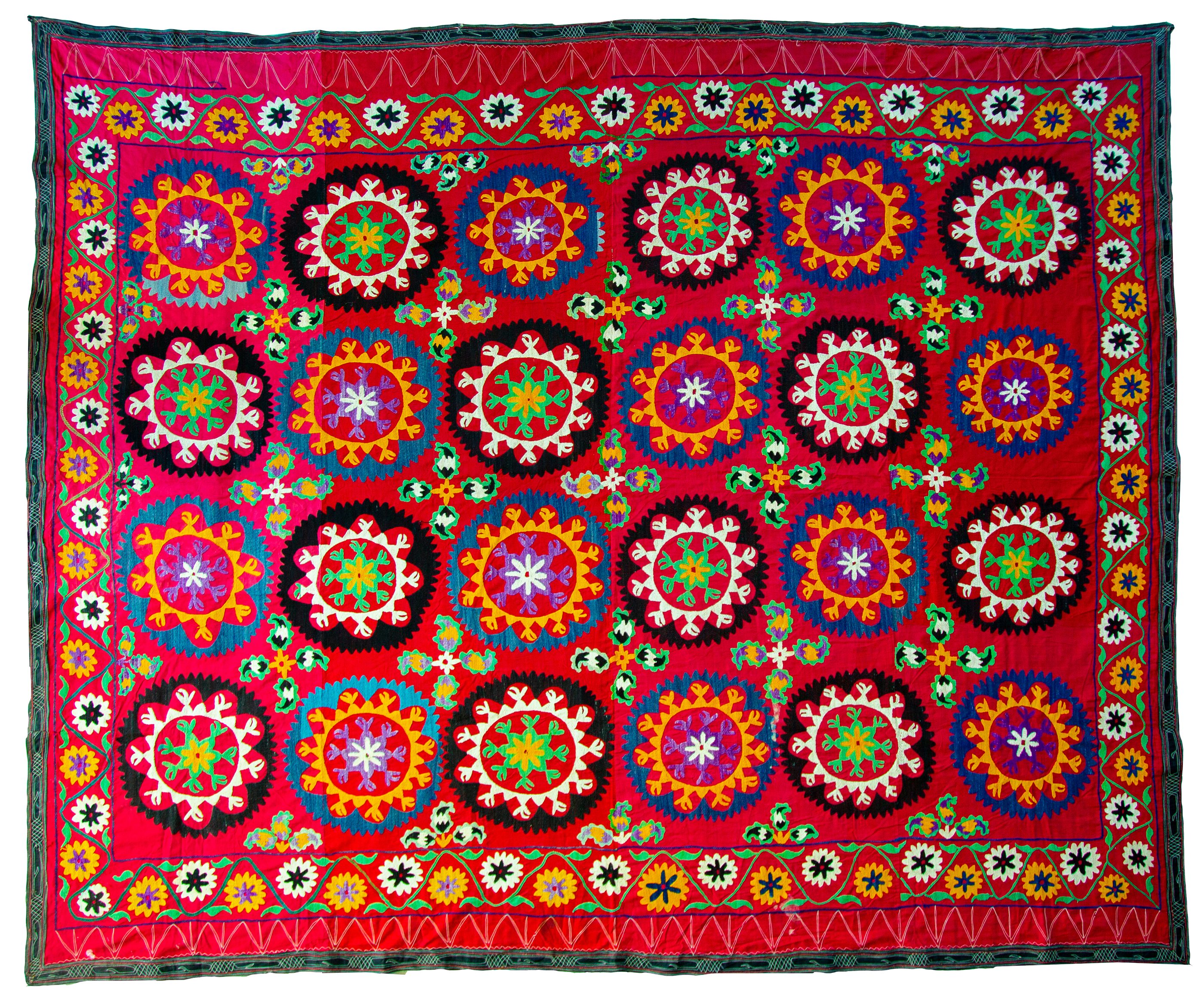
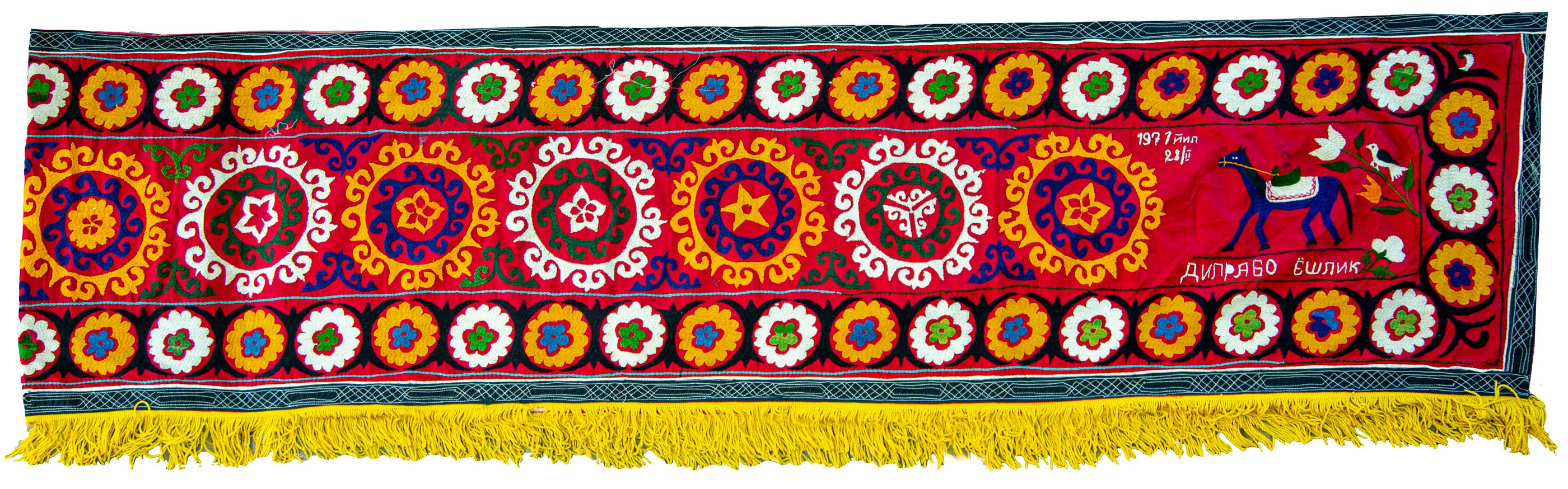
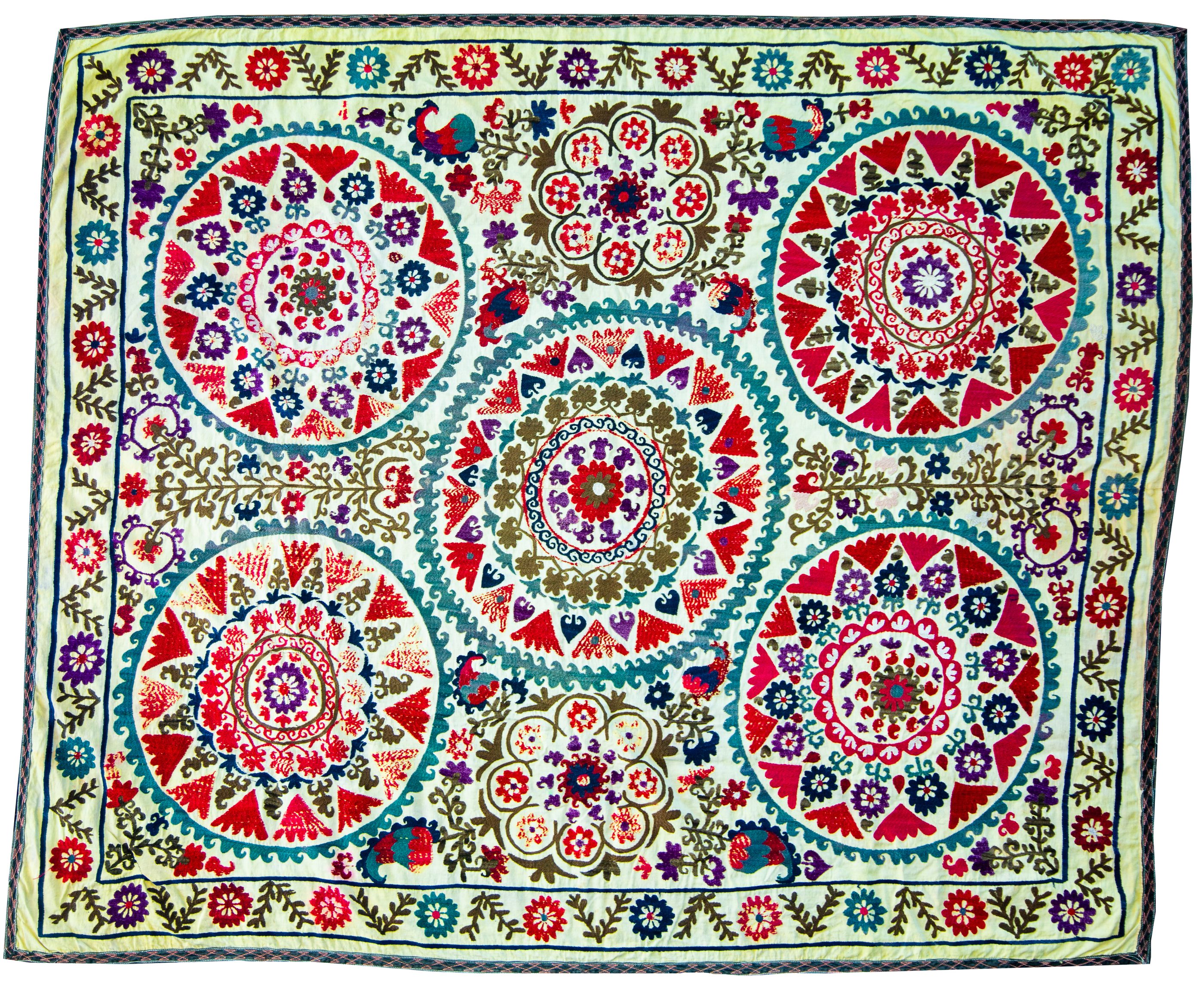
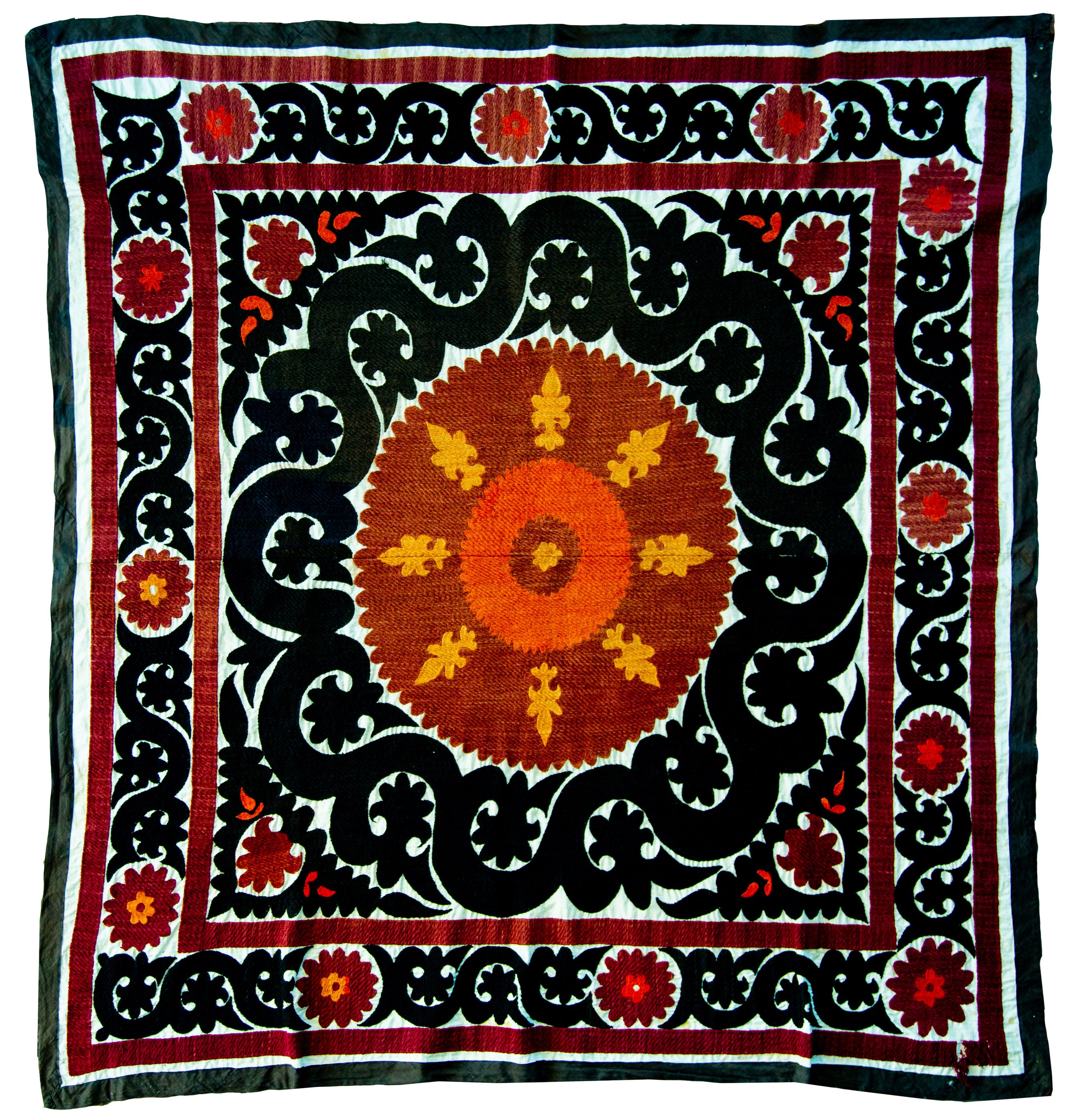
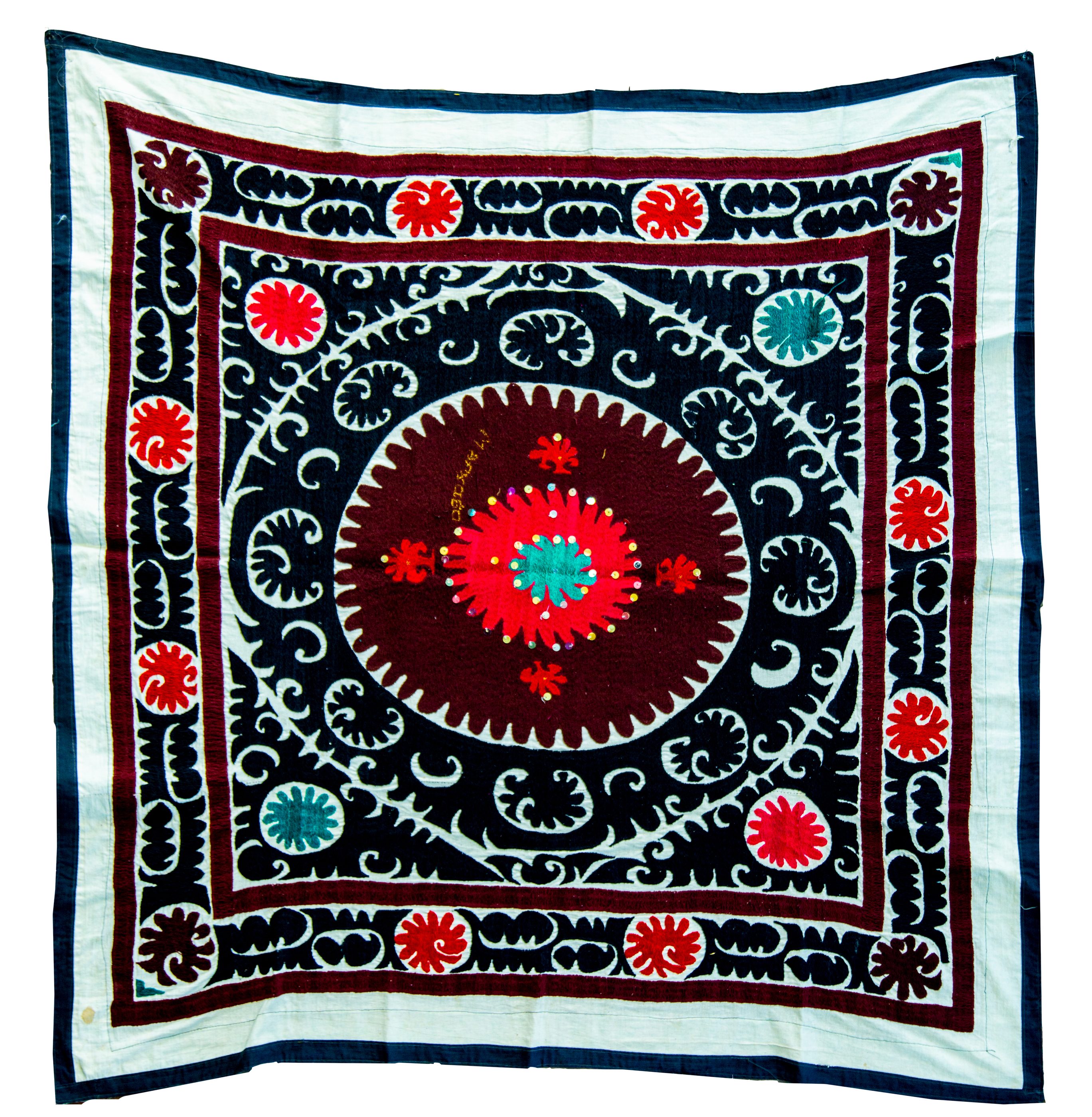
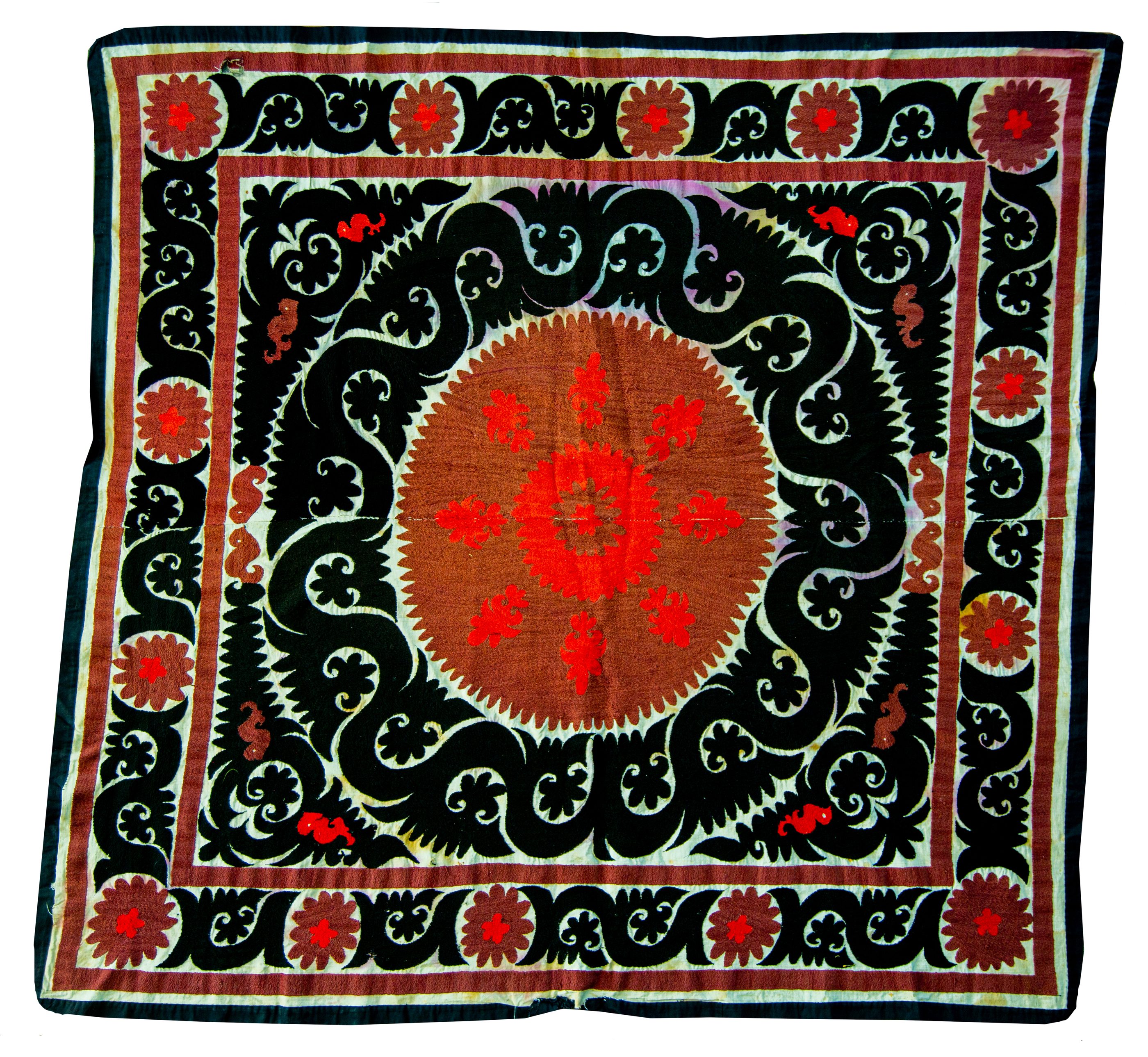
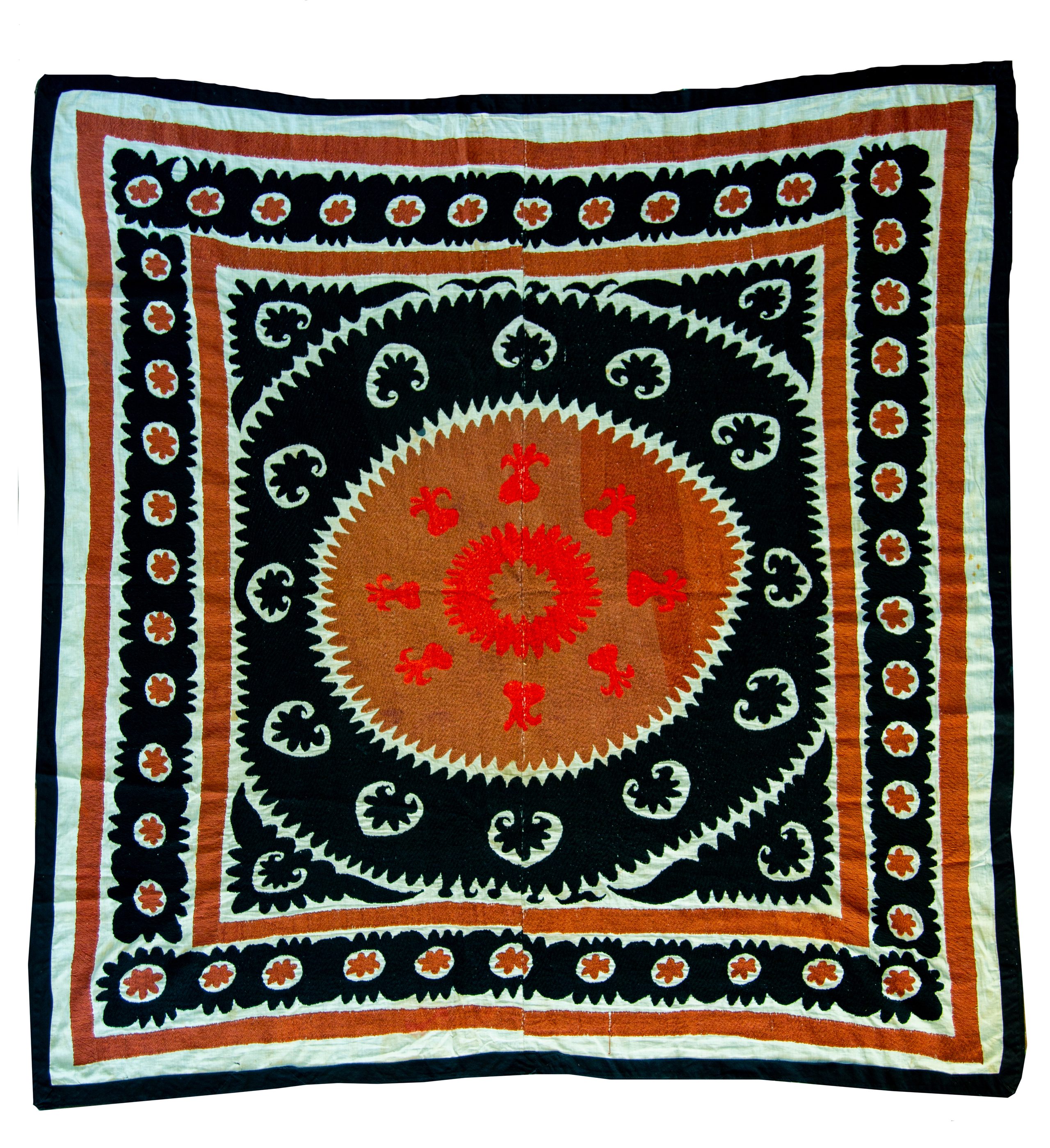
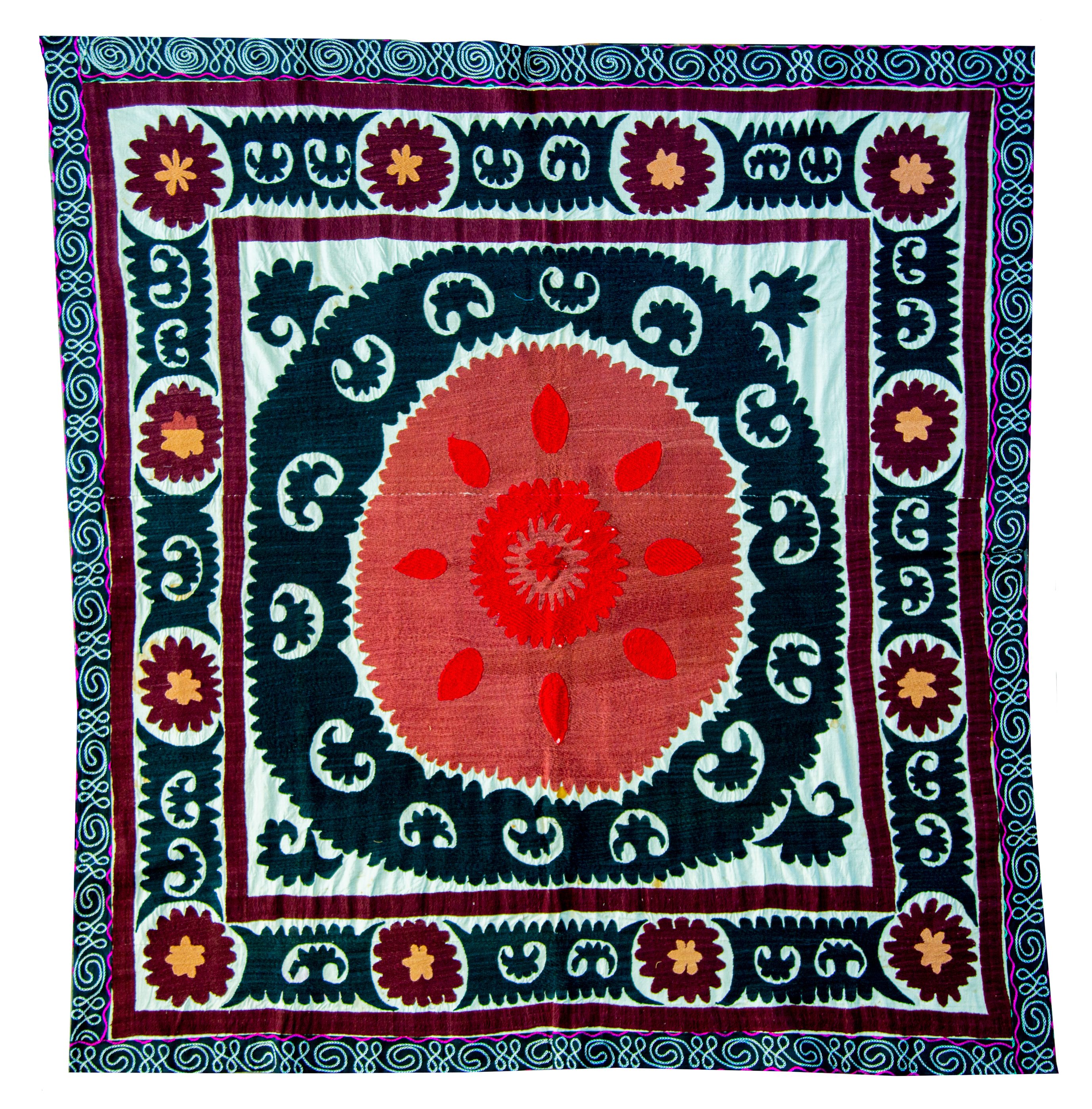
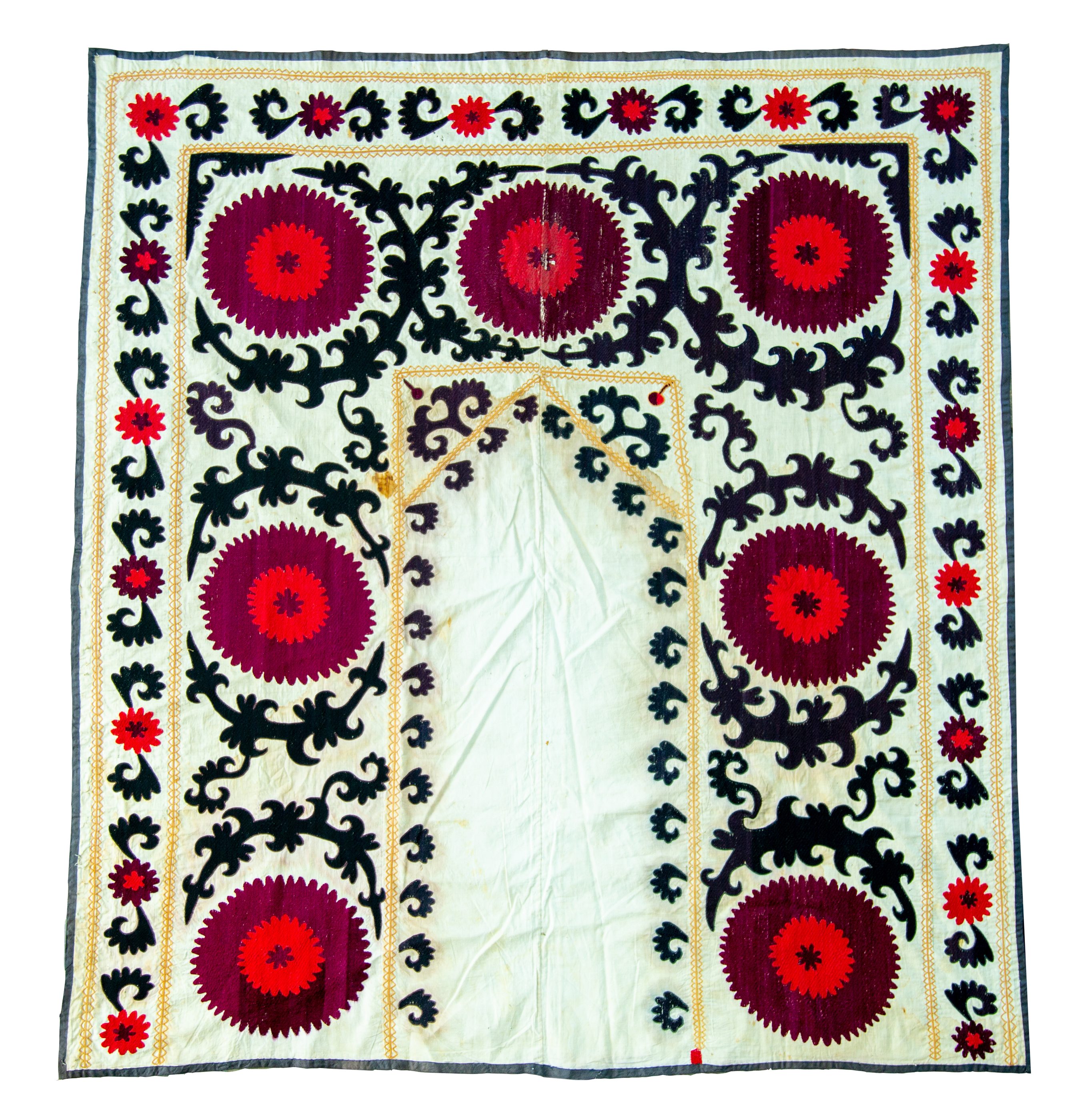
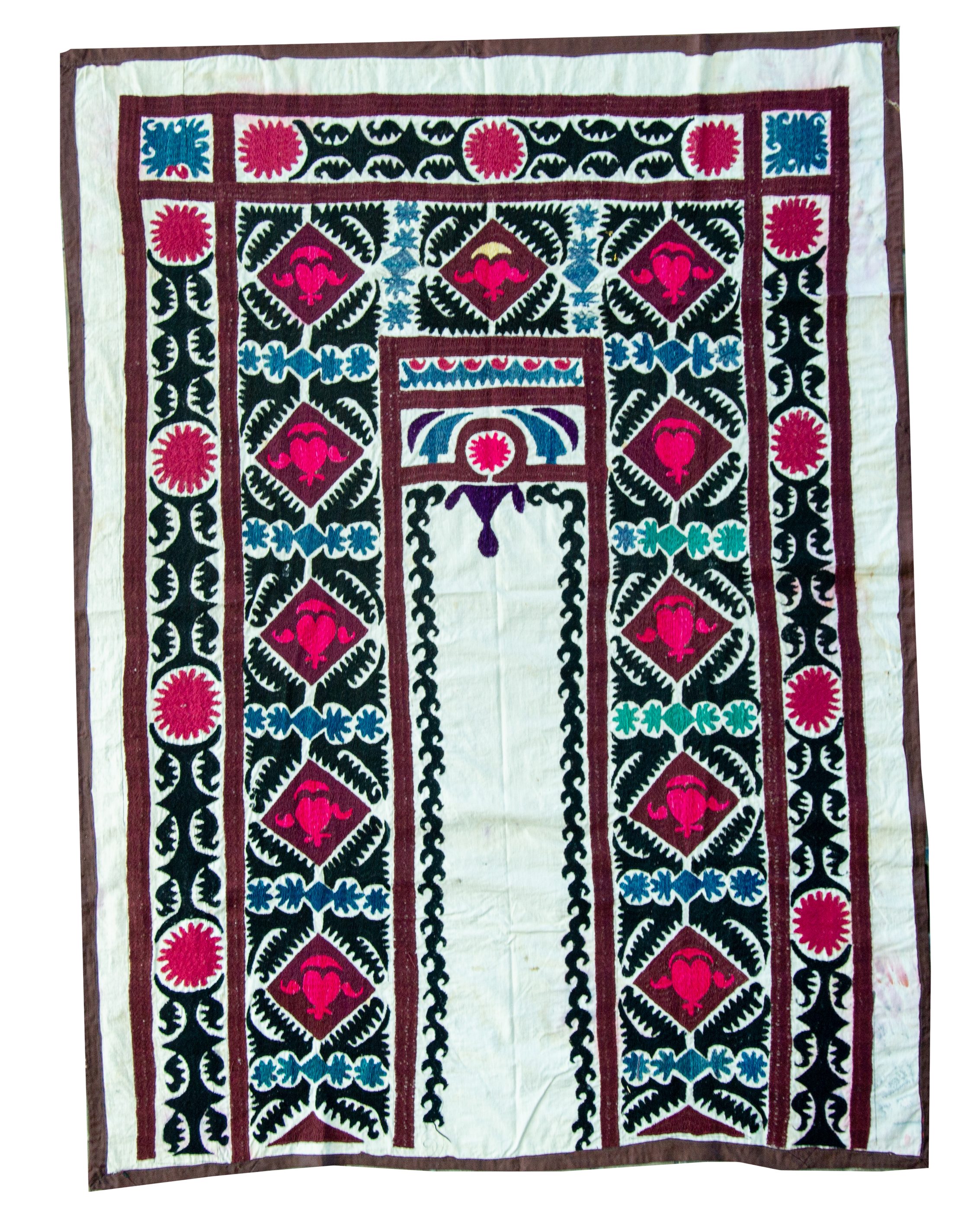
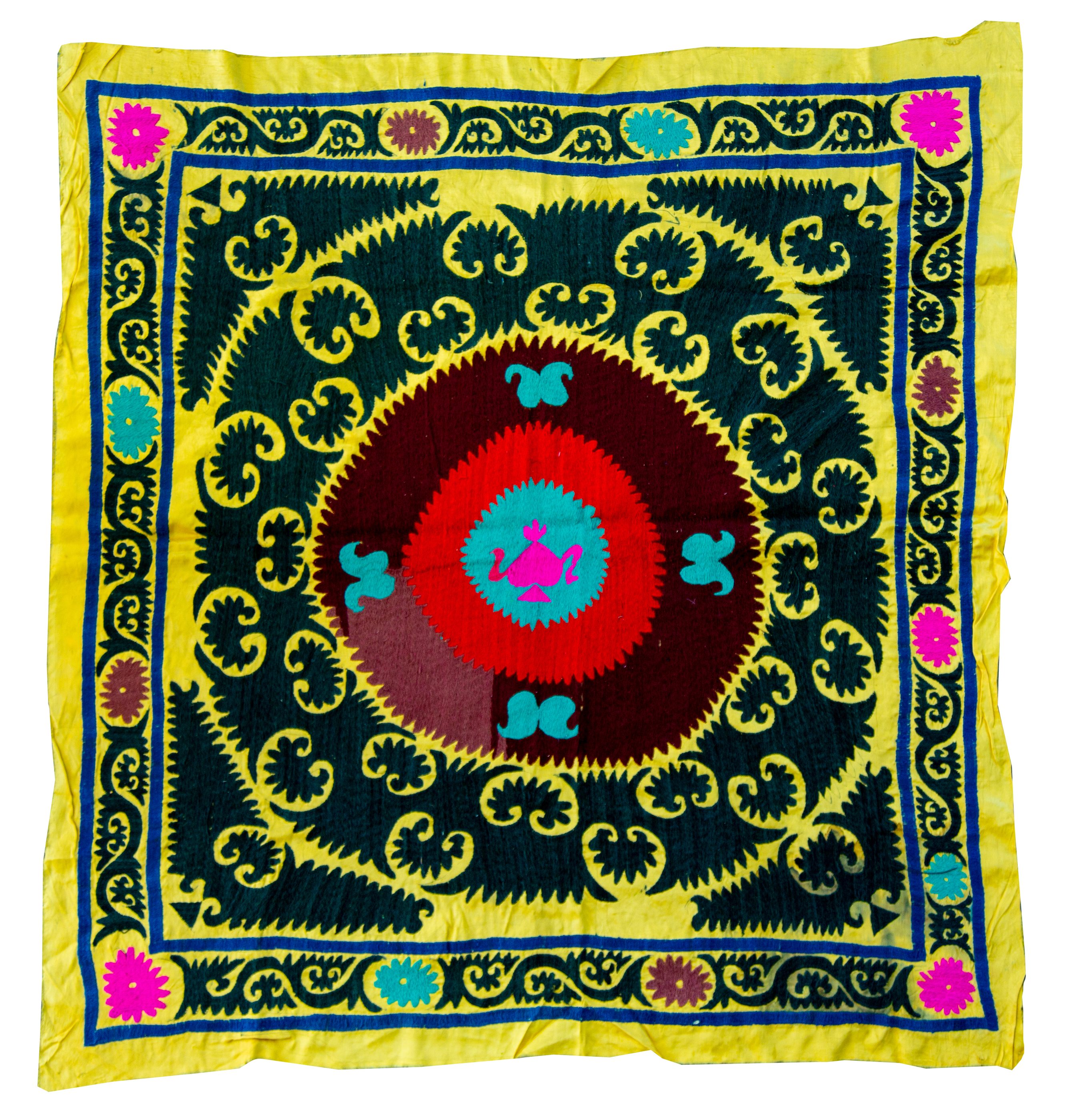
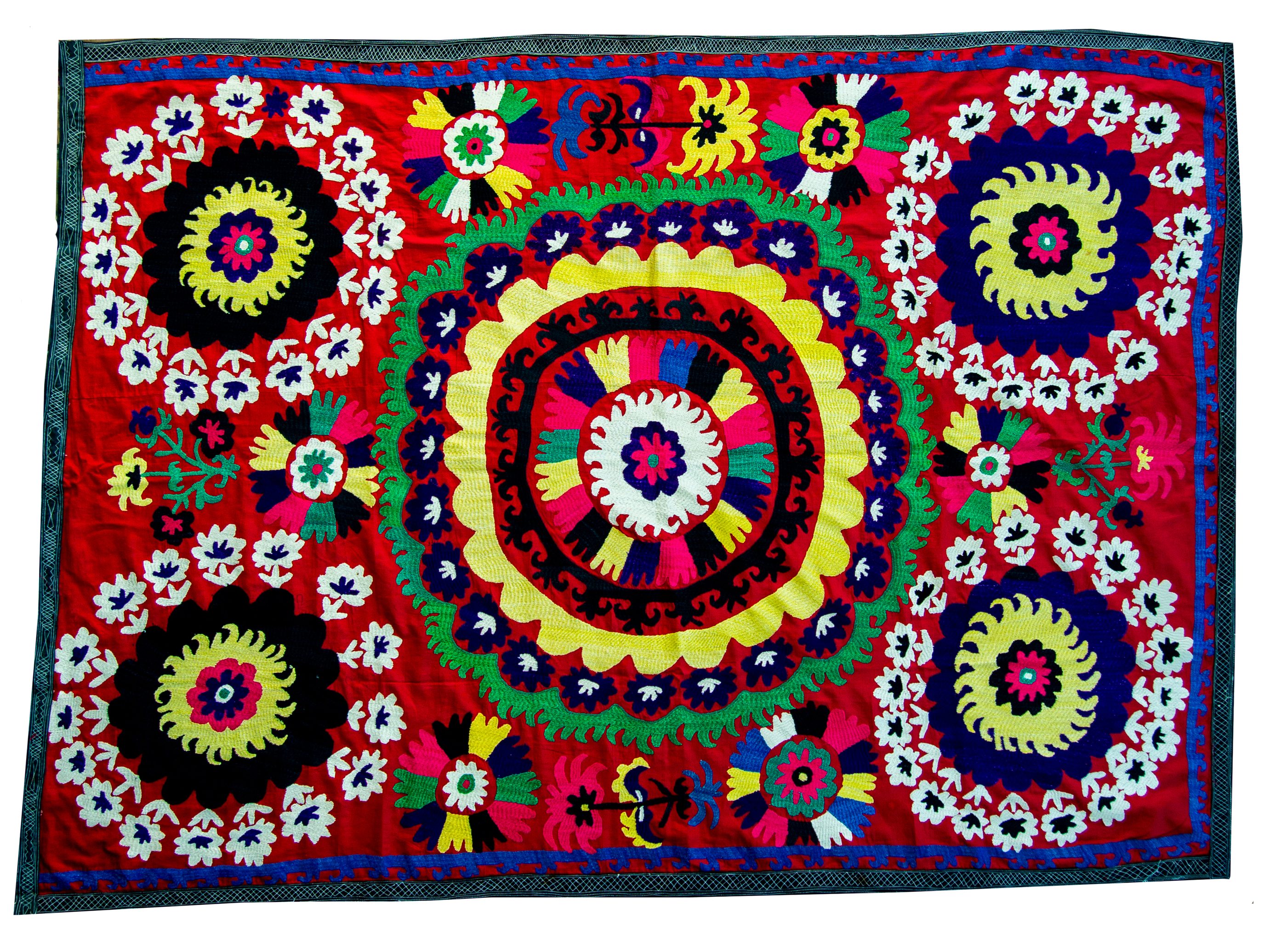
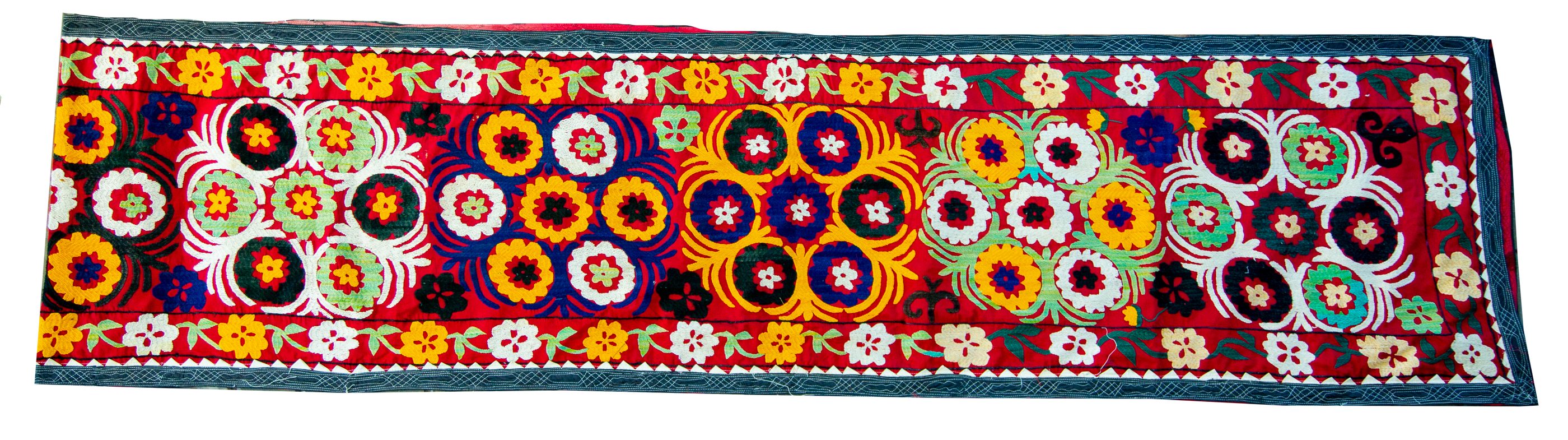
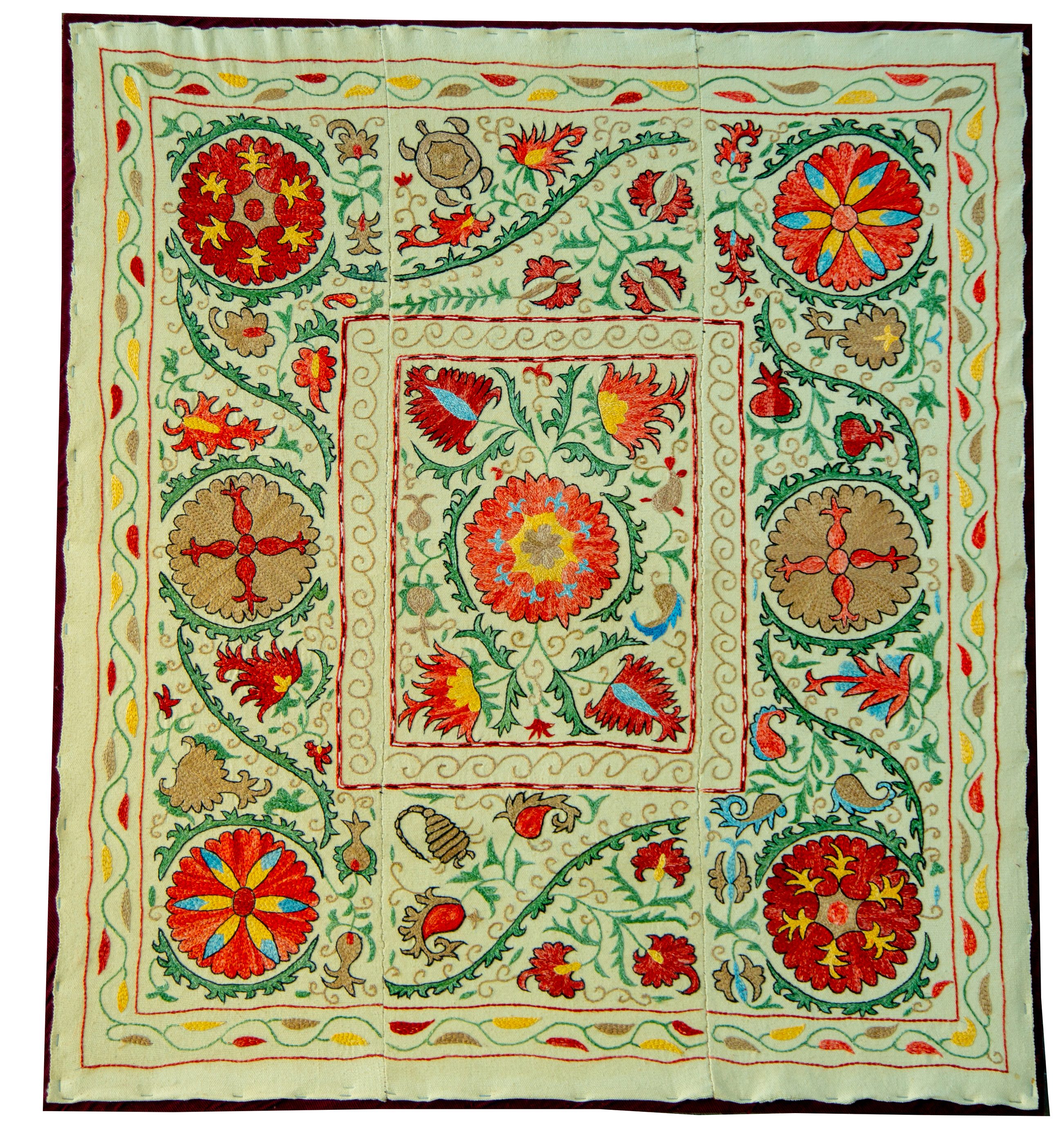
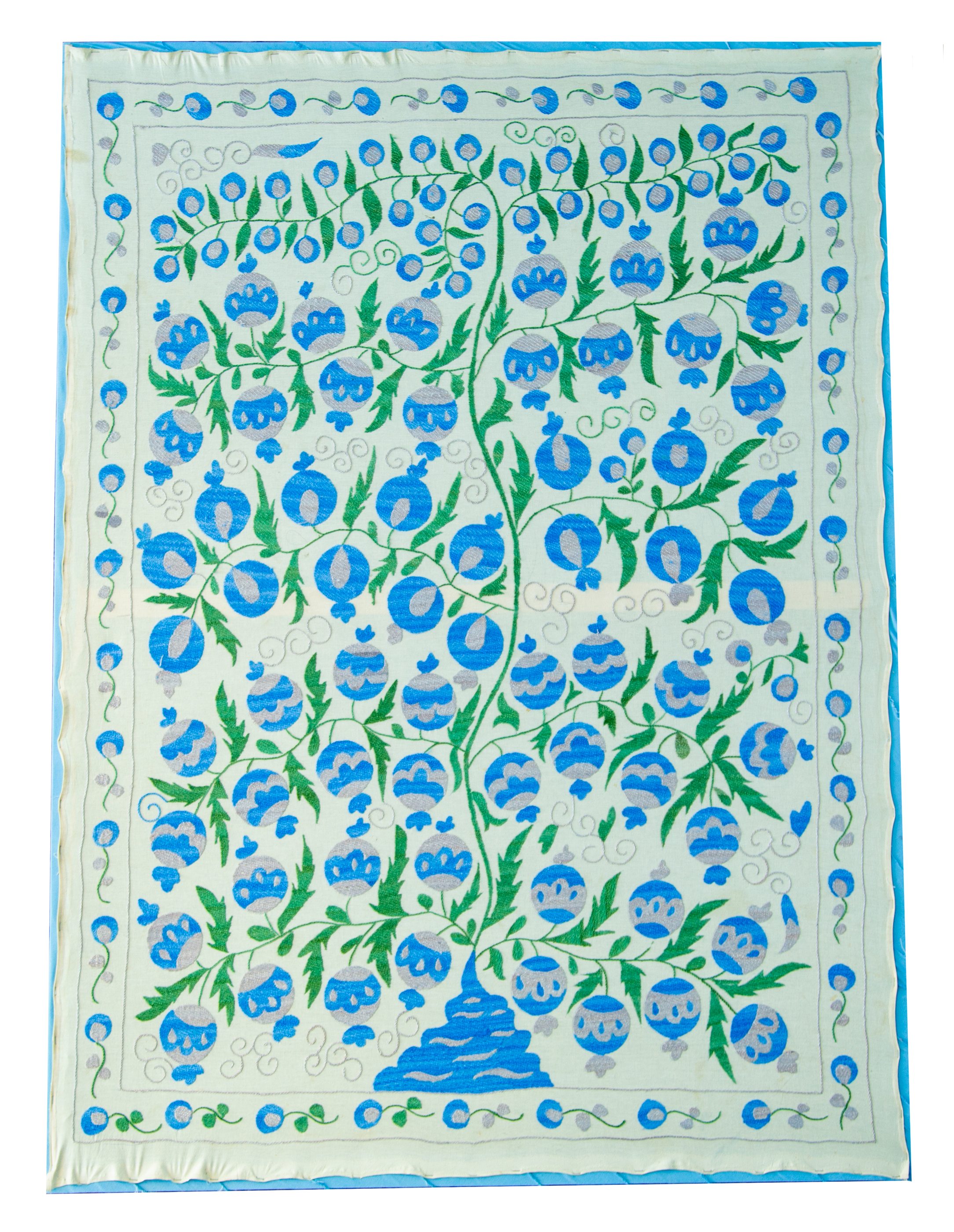
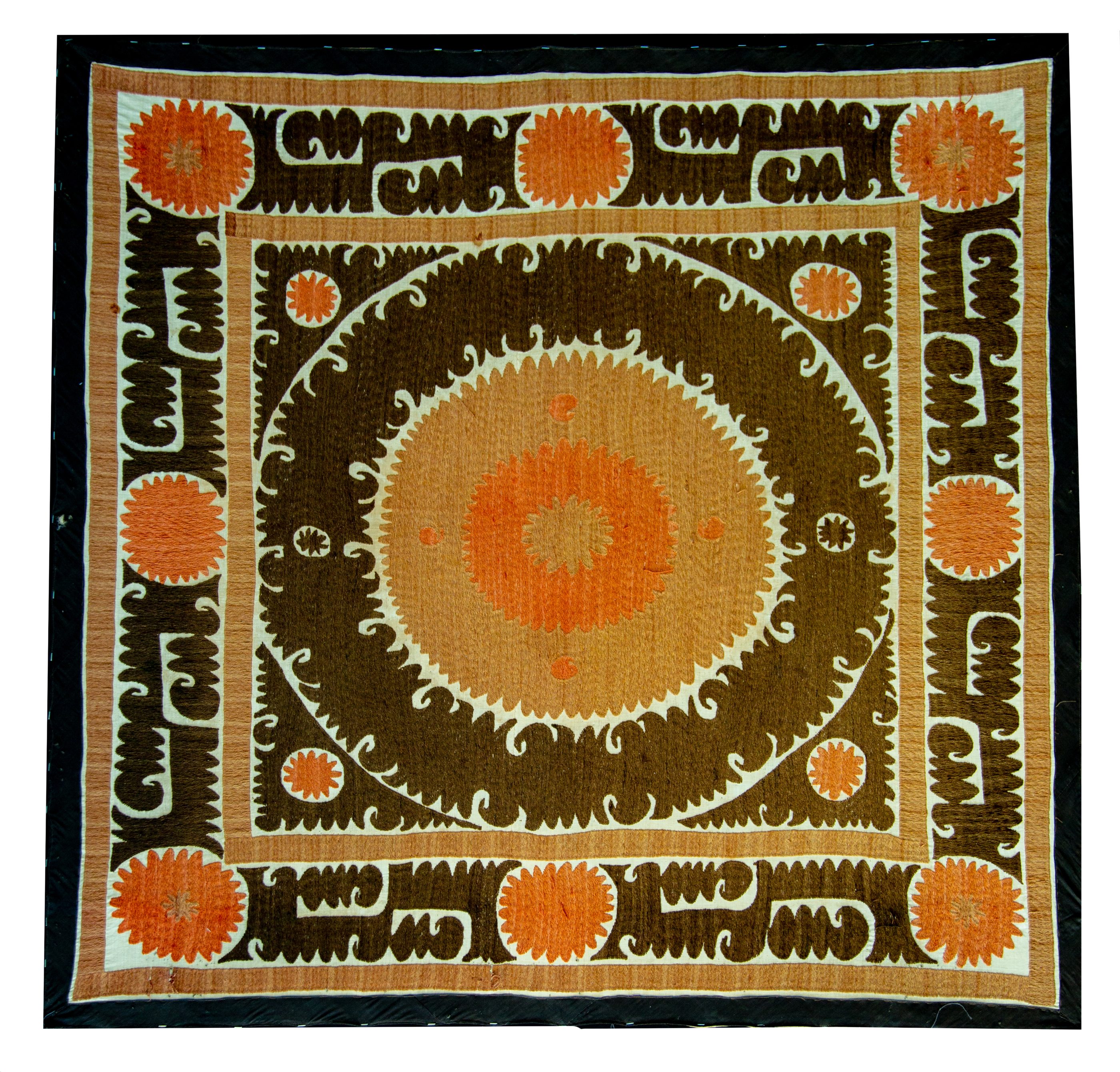
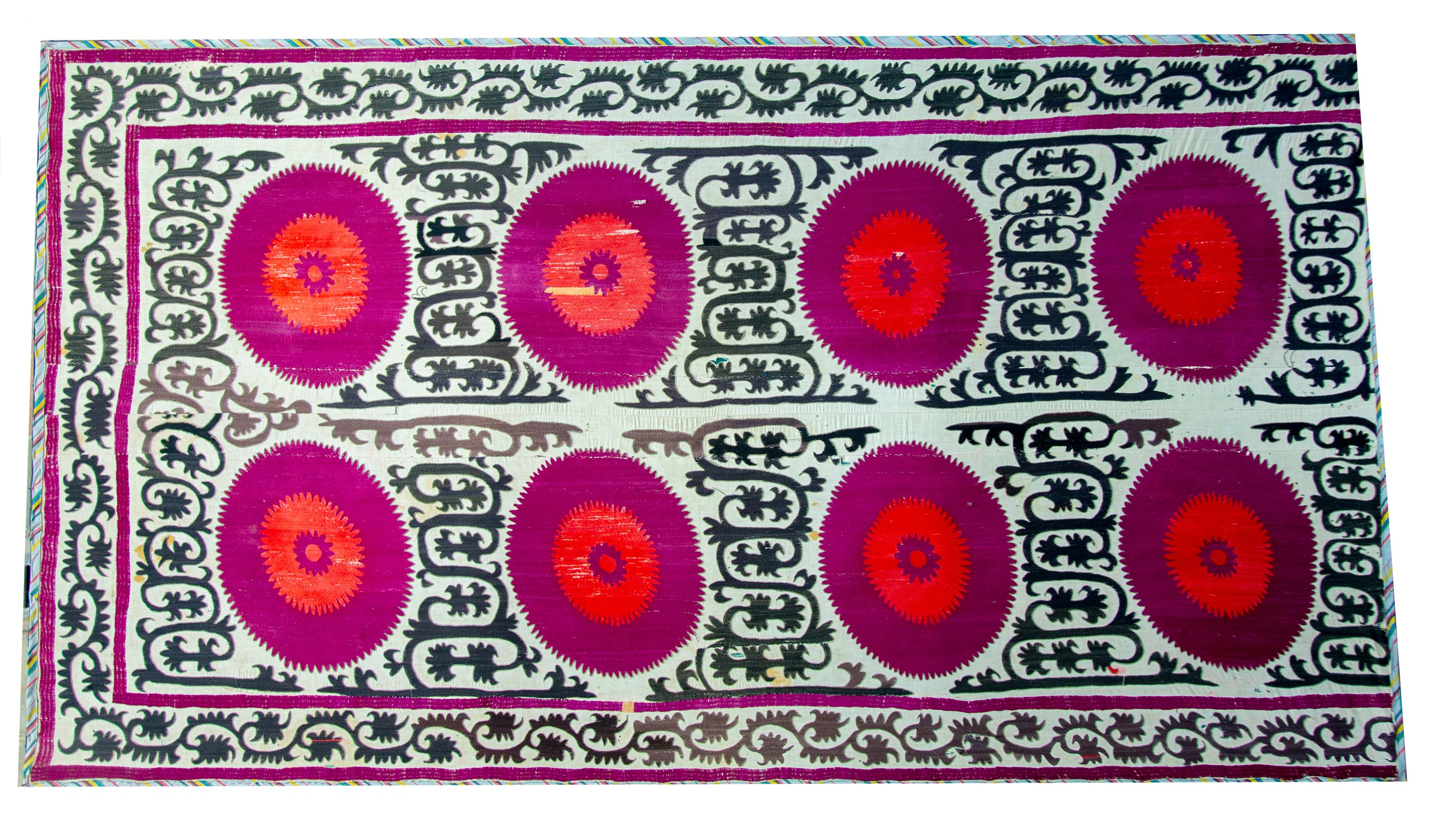
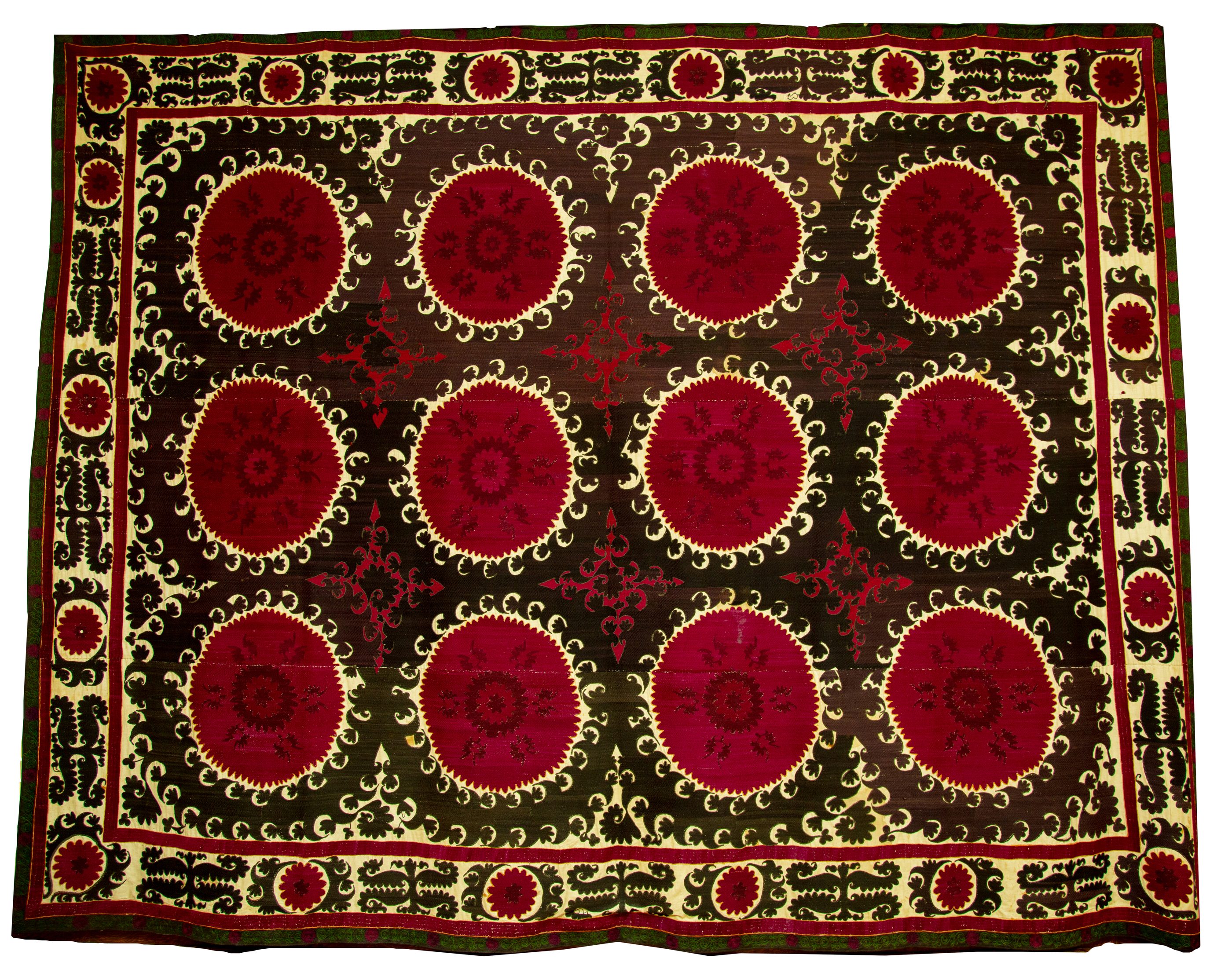
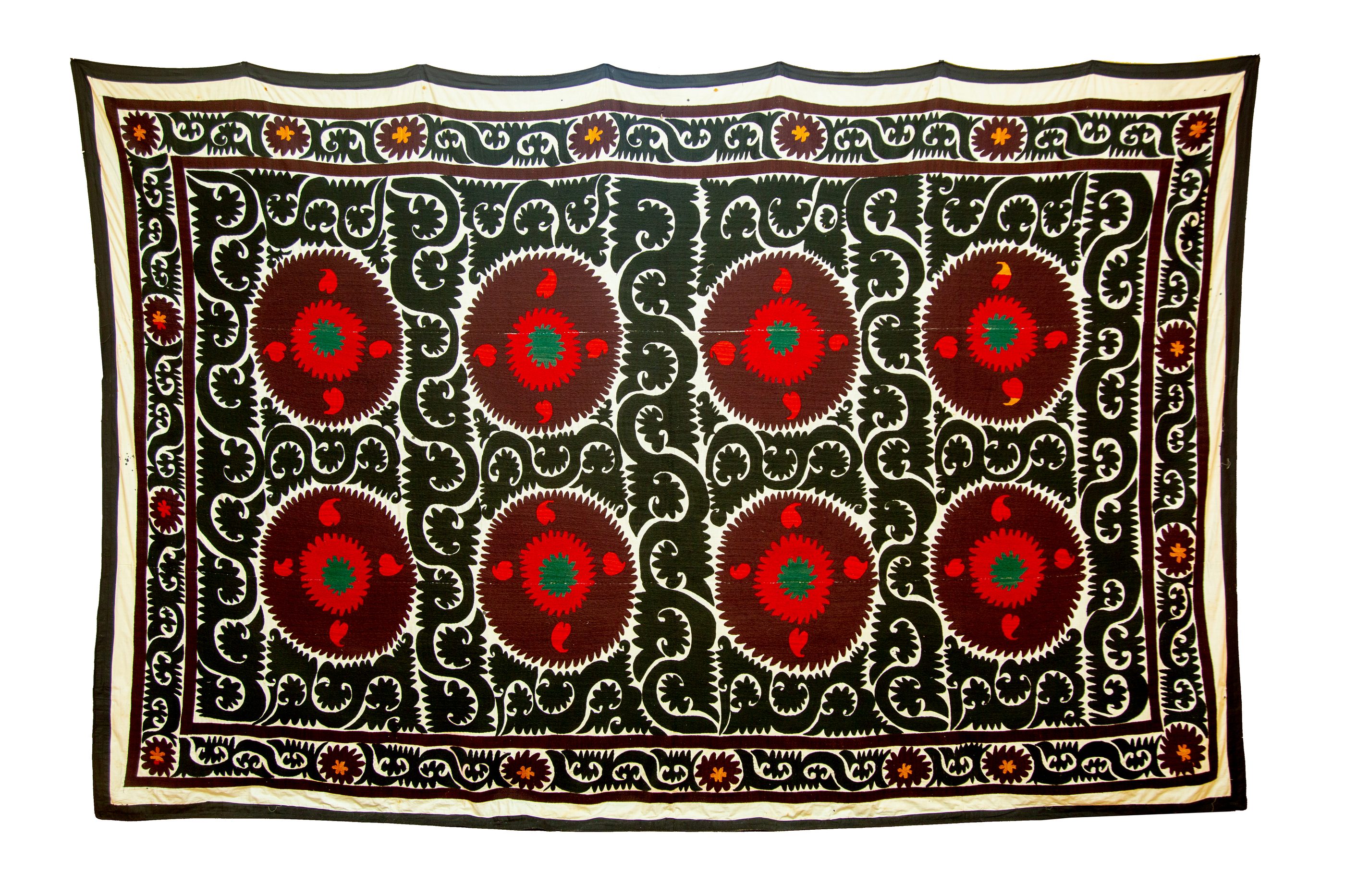
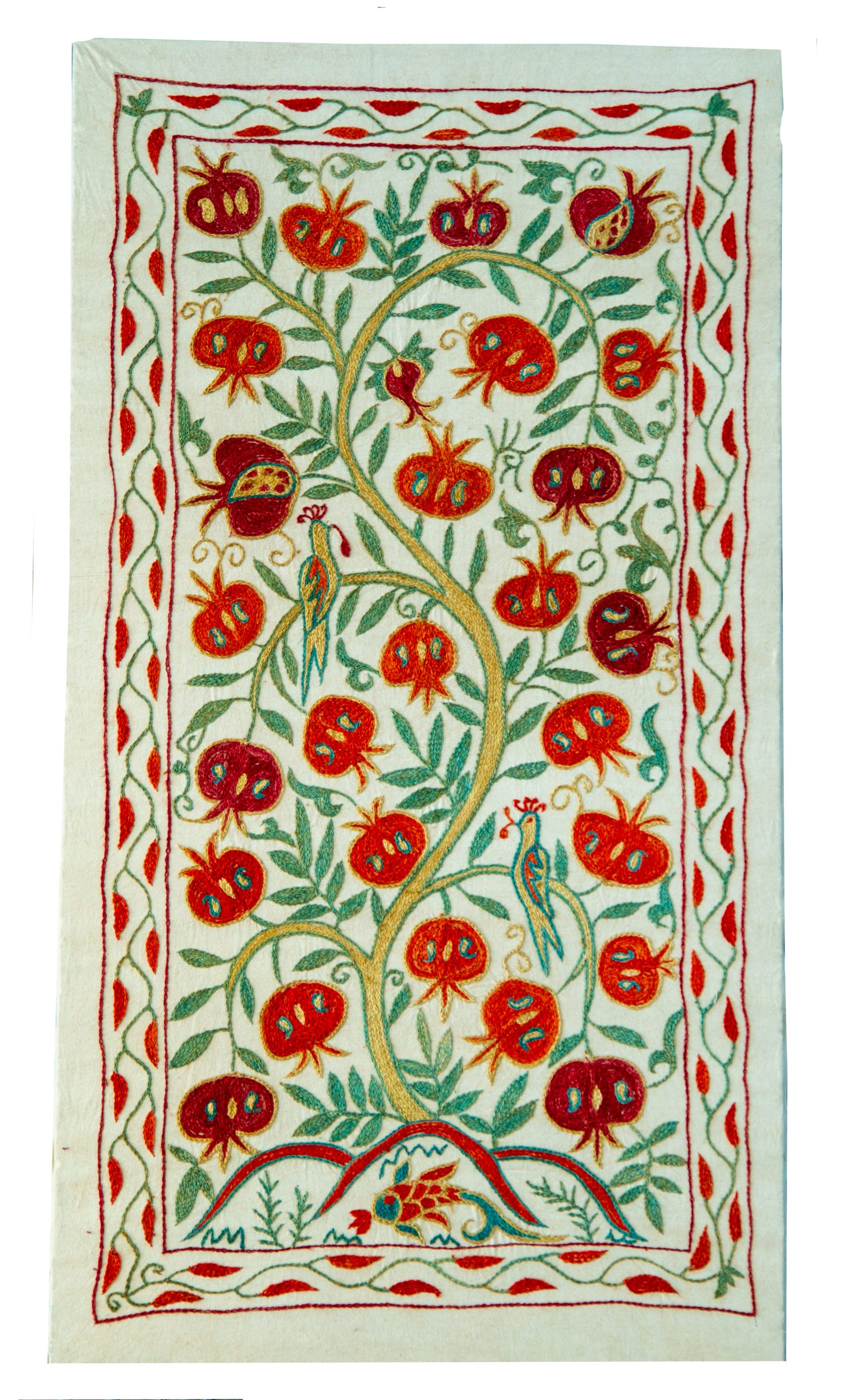
Suzani takes its name from sūzan, needle. The word covers a whole family of embroidered textiles made across the Zarafshon valley — Samarkand, Bukhoro, Panjakent, Dushanbe — worked in silk floss on a ground of cotton or silk, in the hooked chain stitch called yurma and the couched satin called basma.
They were domestic before they were anything else. A suzani was begun years before it was needed, drawn out by a pattern-maker, then cut into strips and handed to the women of a household to embroider separately. When the strips were sewn back together the pattern rarely aligned: a medallion changes colour halfway across, a vine runs out of leaves, a border shifts register. Those seams are the surest sign that a piece passed through many hands rather than one.
The motifs travelled further than the women who stitched them. Pomegranates for fertility, the sun disk, the tree of life, the almond, the tulip. Madder and cochineal for red, indigo for blue, pomegranate rind for yellow. The vocabulary is Persian and Mughal and Chinese at once, gathered along the roads that met at Samarkand and left again.
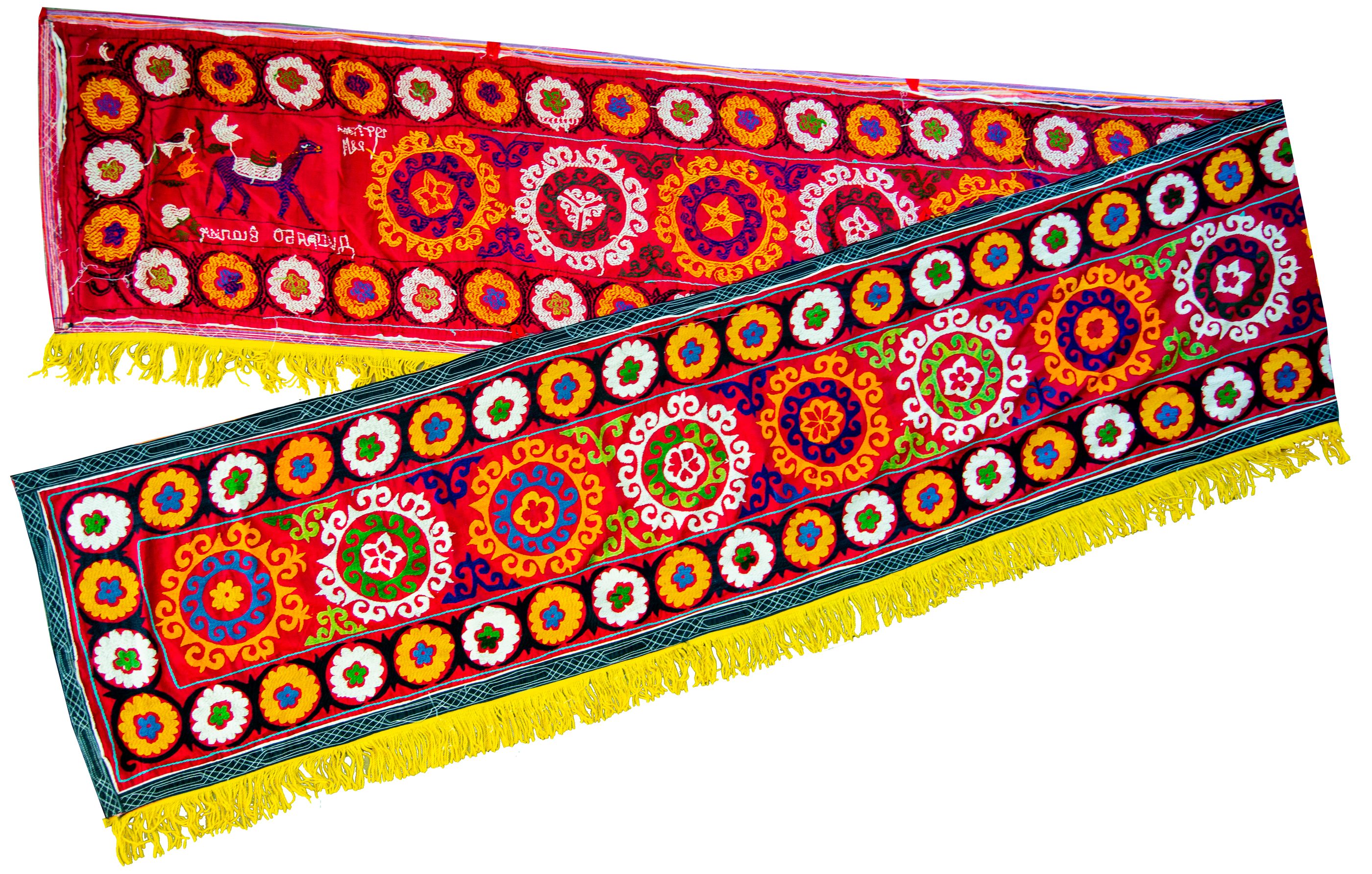
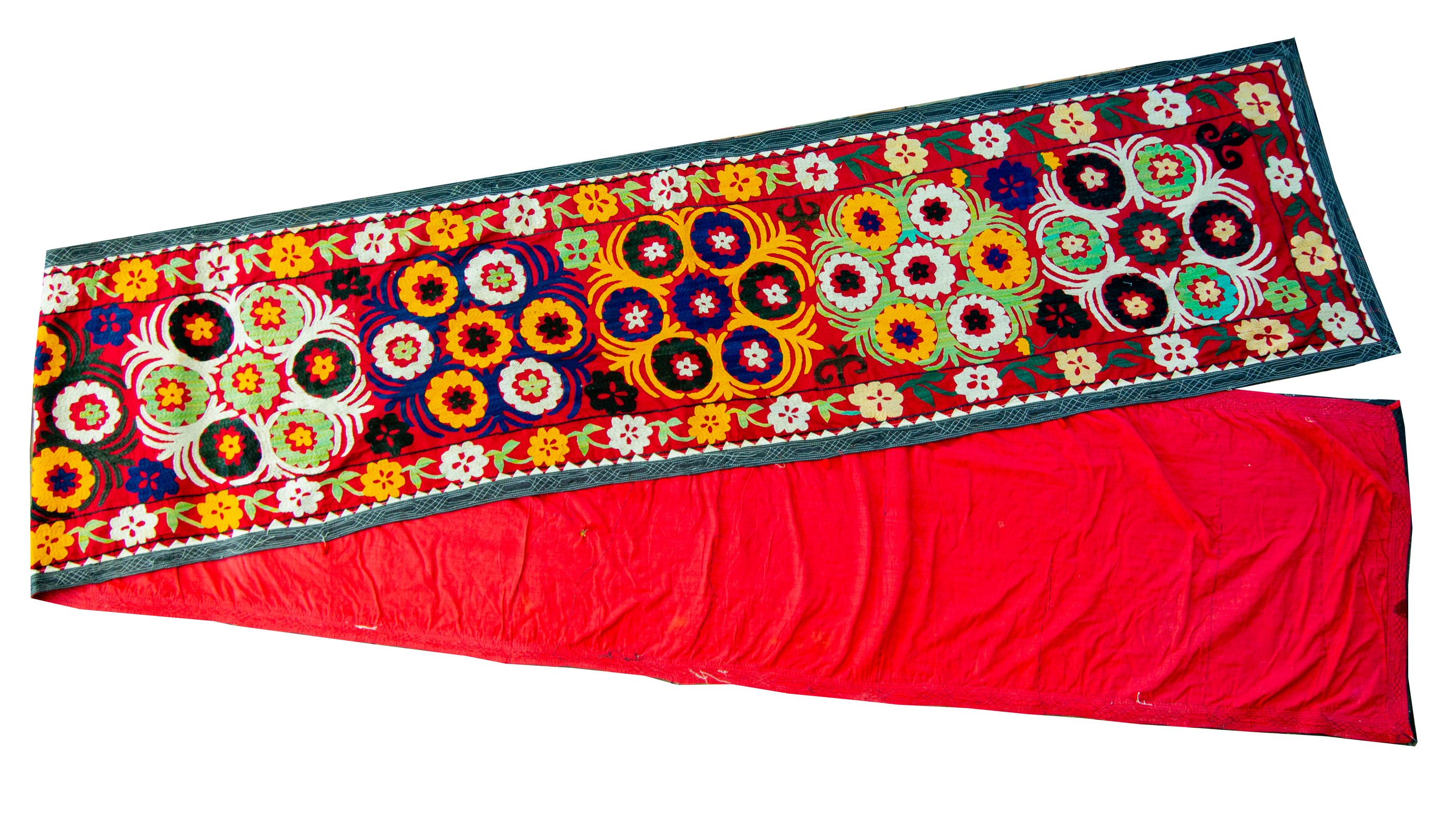
Each piece is photographed flat and front on, so the whole field can be read at once — the way a suzani is meant to be seen when it is hung on the wall of a house rather than folded in a chest.
Click any piece to look closely. Some are shown in a second frame, folded to give their full length. Attributions of place and date are provisional, pending study.